UGA Football coach Kirby Smart on 2026 Sugar Bowl: "It's a different feeling"
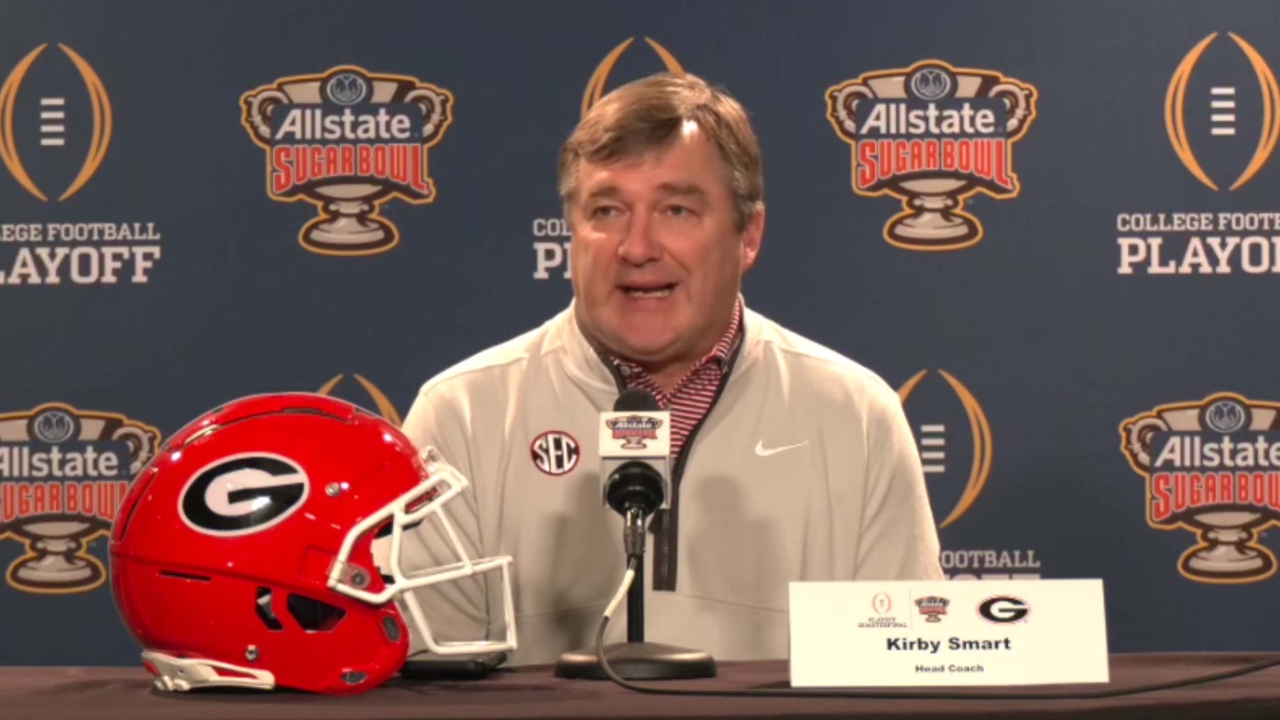
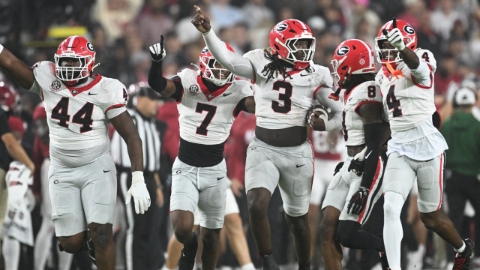
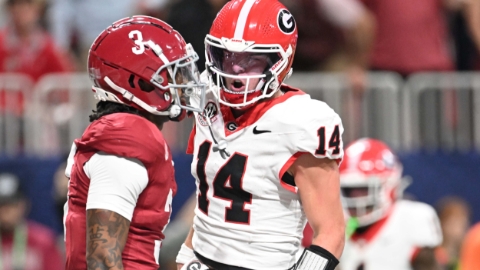
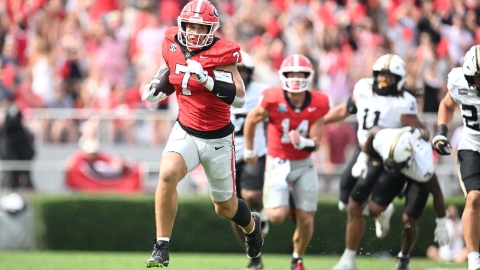
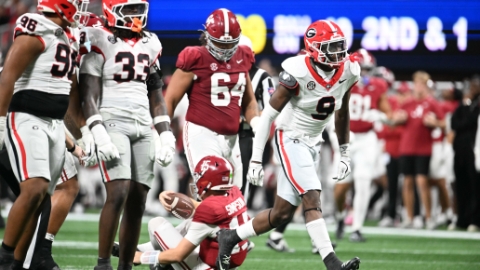
NEW ORLEANS - UGA football coach Kirby Smart met with the media for 35 minutes on Tuesday, two days before the No. 3 Bulldogs are set to take on the No. 6 Ole Miss Rebels in the College Football Playoff Quarterfinal at the 2026 Sugar Bowl.
COACH SMART: I want to open with thanking the Sugar Bowl Committee, who is so kind and gracious to greet us getting off the plane. I don't think people know the class of people that the Sugar Bowl Committee is. I feel like I've played in this game or coached in this game a lot of years, and very few groups do it quite like the Sugar Bowl does it. They have a lot of traditions here, and we appreciate those, and they don't go unnoticed.
But they've been welcoming at the hotel. We got there yesterday, and we're locked in for our guys. We got some prep we've got to do today and get ready to go play a game that I know everybody is excited to see in the country. It's a great time to be involved in college football. There's some great games ready to be played, including ours. I'm excited to see our kids go play.
Q. When your team walked off the plane yesterday, they described it as a business trip. How much did the result of last year's contest factor into that mindset?
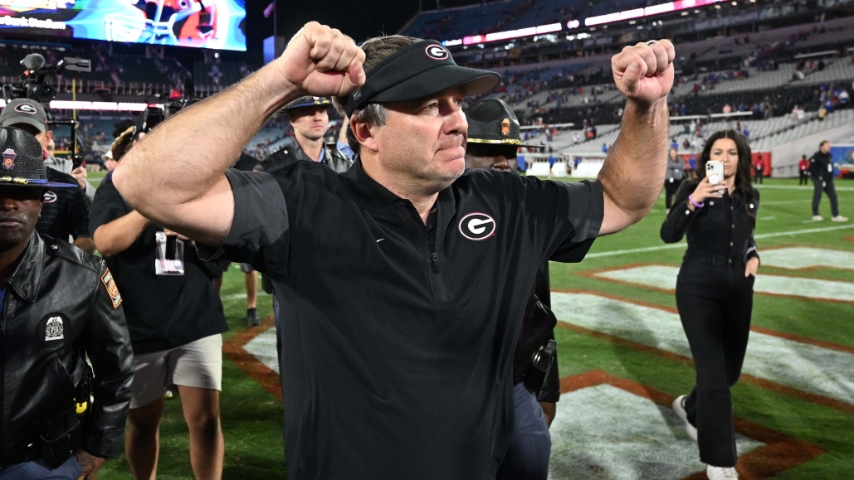
COACH SMART: Well, it was a business trip last year. It's always a business trip for us. There's a bowl game, there's a reward at the end of season, and then there's a College Football Playoff game. When you're part of a CFP, a College Football Playoff game, it's meant to be a business trip it's win or go home. I think that requires a certain kind of demeanor when you play in a game like that. That doesn't change from year to year.
Q. One year ago, when you guys were down here, the incident surrounding New Year's Eve and being back; and also the loss of your father during that week. When you look back on that, is it surreal to be back in the city one year later?
COACH SMART: It's a different feeling. I think my attention and focus is always forward on what we have to do here. I think landing yesterday brought back some memories, because the last time I was here, I was just leaving two or three days after the game with my family and it was different. It was a different mood, a different time. Very different frame of mind. You can't help but think a little bit about last time I was here, what I was going through. I was going to a funeral home and going to meet with people that I had never met with, and it was a very unique experience.
But that's not what this trip is about and our guys know that. We owe it to all those guys over there in sweat suits to be focused on the task at hand. It was a terrible time in this city. Unfortunately, people lost their lives during that event. It was a horrific deal. It changed everything in this city and really the celebration of New Year's.
But our guys are excited to be back, and they're excited to have an opportunity to play in one of the best events. An all-SEC matchup in the Sugar Bowl? I don't think many people could have thought of that 5 to 10 years ago.
Q. You guys were talking about you want to move forward. Have you had an opportunity or have you had that conversation with your players to discuss how maybe some of the returners are feeling about last year, and them trying to move forward as well?
COACH SMART: We don't really talk much about last year. We didn't talk about last year's games that we played other teams on the schedule. It's never really about last year for us. It's way more about living in the moment, how do we prepare for the moment. There's nothing about last year's game that's going to help us in this game. There's nothing about our last game against Ole Miss that's going to help us in this game.
It's really about what can we do for the next 48 hours to prepare better, to be ready to play a big game.
Q. As the season went on, it looked like you guys have gotten better. Are you pleased with the progress? Did you ever think, if we can get to the point where you want to be, that you could be a playoff team, a national championship caliber team, as you often are? Did that change over the course of the season? Where earlier, you're like, there's things to work on, things to develop.
COACH SMART: I think every team is a work in progress. You're constantly trying to reshape and retool your team. We certainly grew in a lot of areas. We lost some players in some areas and had to replace them. I don't know that there was ever a point where I said, okay, this is a playoff team. It was a team that was in the playoffs during the year.
Because every game, every road game and every home game we play in our conference, is one game away from being out of it. You don't control a lot of the outside wins and losses of other teams. All you control is how you practice and how you prepare.
I was really proud of the improvement this team made. But they are a playoff team. They're an SEC championship team. And their next opportunity to play is in two days. You'll be judged by how you play then, not how you played in the past.
Q. After the Georgia Tech game before you knew you were going to play Alabama again, you talked about looking at the layoff differently and talking to some folks and trying to handle that differently than you did last year. Can you go through some of the people maybe that you talked to and how you guys approached the layoff differently this year?
COACH SMART: I don't want to go into details of who all I talked to, because some people don't want their information disclosed. But I think as a coach, you would be remiss if you don't get other people's information and input. It doesn't mean you use it, and we didn't use all of it. But we talked to a lot of people, a lot of people who were in the playoffs last year.
COACH SMART: We talked to a lot people who were in the playoffs last year, guys that had the bye, guys that didn't. NFL teams who had the bye in past years and didn't play in the wild card. You just look at different ideas of trying to do things and simulate things and maybe try to do a better job.
Look, we think our process works in terms of the layoff we've had. I've been part of a really good program for a lot of years now, and it's worked for us, what we've done. You tweak it, but you don't make major overhaul.
Q. What are some of the biggest concerns for you to attack during a long layoff for your team?
COACH SMART: Well, shape, game shape. You can run all you want, but you can't get into game shape until you play a football play. Football consists of sprinting 10 to 15 yards, tackling somebody, getting up, repeat that, repeat that. You don't do that in a layoff. You don't go tackle live and hit people and risk injury, especially this time of year.
So your fundamentals, blocking and tackling, can deteriorate really quickly if you're just worried about being in shape. So we try to attack it all. We try to simulate things, make things happens. As coaches, you get really comfortable and you don't make decisions in critical moments. Next thing you know, you're out there in special teams and something happens you haven't prepared for -- where in the season you have a routine you follow. There's things you try to simulate as best you can. But it is different.
There's no sport where you have this long of a layoff. Not basketball, not football, not baseball, where you go from playing once to 25, 30 days playing again.
Q. Another community question. I remember after last year's game, you took a moment to credit the Sugar Bowl and the city and the state and community and how they handled a difficult situation. In that light, and just in terms of the life perspective that it gives people who experience that, is it special in a way to be able to come back one year later? Or is it just difficult personally?
Has there been any chance to try to go to Bourbon Street and see the memorial or anything like that yet?
COACH SMART: No, we just got in yesterday, got in late yesterday. Our time is really precise in terms of to and from places. They got us tied up in things. Players got a little bit of time to eat dinner and move around some and see the city, which I think is important.
I give the Sugar Bowl Committee a lot of credit. They bring the city of New Orleans into us a lot more now. A lot of the same activities you would see out on Bourbon, they bring to the hotel. They bring events into the hotel and share some of that culture and atmosphere of New Orleans, which I think is important.
They do a great job of doing that, and our guys are excited about the game.
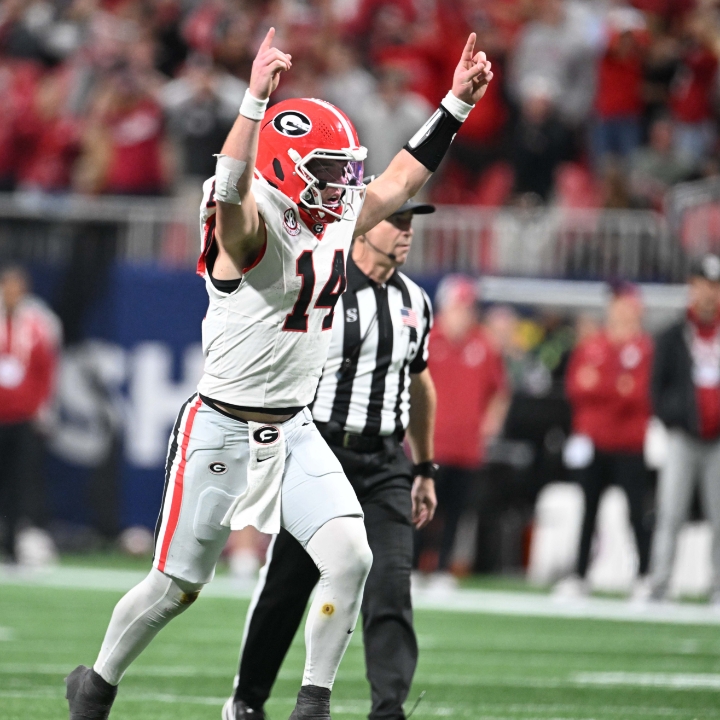
Q. Can you reflect on what Gunner [Stockton] has become over the last year or so? It wasn't an ideal situation being thrust into the SEC Championship, the craziness that happened here. But now the stability of this season, how he's grown from that first opportunity last year to getting you guys here.
COACH SMART: We knew the minute that -- when we realized at halftime of the Texas game that Carson [Beck] couldn't go, Gunner was going to be our guy. And as much as you say: Well, he's new, he hasn't done it, woe is me, you say there's a reward in this, and the reward is the experience you get moving forward.
He capitalized on that experience. He got a ton of bowl practice. He got to develop earlier. I think maybe that helped us early in the season when he had success, the fact that he had done all this in the runup to this game. He played against one of the top defenses in the country in this game, and he's gotten better. I mean, he's the leader of our team. He's the guy, the catalyst that makes us go with his legs and his arm, and the players play hard for him.
I'm proud of his growth this season. He's played some really good teams. He'll play another good team in two days, and I have so much appreciation for what he's done for our overall team with his leadership, his mindset, and his approach.
Q. Kirby, what early enrollees are now practicing with the team, or were back in Athens in preparation for this game?
COACH SMART: There's nine of them.
Q. Is Dontrell Glover expected to start in the Sugar Bowl?
COACH SMART: Bo (Drew Bobo) and Dontrell have done a great job in response to what they've had. We demanded a lot of them. We put a lot in front of them. I'm proud of where both those guys are and what they've done to earn the right back with us and the way they manage it.
Q. I'm sure you got a lot of questions about the first matchup already with Ole Miss. But when you look at how each of your teams has evolved to this point, what is the way that you've seen Ole Miss change that you guys are preparing for, coming off a long break?
COACH SMART: Well, they're very potent offensively. They've got weapons all over the field. One of the best backs in the country. One of the hottest quarterbacks in the country with legs. They spread you out. They go tempo. They create a lot of issues because of the skill set they have. The offense fits the quarterback in the back and the skill players -- they have assembled a perfect crew there.
Defensively, people don't give them enough credit for disruption and the way they move and stunt and do things up front. They play a lot of guys up front. They play really hard. I don't know that I can say there's a ton of change. We haven't changed that much. If you're a good team you do what you do and you do it well. You don't trick people. You go out and you beat them with what you do best. I feel like Ole Miss has continued that.
Even after our game, they went and played in a CFP environment -- I guess it was on the road at Oklahoma, right? They played in tough weather conditions and they found a way to win that game. They beat a really good Florida team, in my opinion, that was a tough game. They played a rivalry game, like we did against Georgia Tech, they played Mississippi State. That's a rivalry game in that state that's very valuable to the people of that state. It doesn't matter what your record is.
They've continued to improve. They've grown. They had a couple of guys step up and play big for them. Just like us, you have to have next-man-up mentality when you have injuries.
Q. You and Pete Golding share a lot of similarities in your background as players and then coaches. Could you talk about him and what you thought when he got the job at Ole Miss?
COACH SMART: I got a lot of respect for Pete. He worked his way up through the ranks, very similar to the way I did. He's coached under some really good coaches. He's been a part of some really good defensive staff. Whether Ron Roberts, [Nick] Saban, all the guys that are really good defensive coaches.
I don't know Pete that well. I just know Pete through other people. I'll be honest with you, when he got the job, I feel like we were in the middle of chaos ourselves. I want to say that was around maybe the Alabama game? I don't remember when that was. So I didn't initially see it.
But as we found out and the playoffs came out and we were aligned to possibly play them, I'm happy for him. I'm happy when someone that works as hard as he did and worked his way up and dedicated himself to being a coordinator, position coach coordinator, and then head coach. That's the way it's supposed to go in terms of if you have success and you're able to do it. He's done it in a place that's special that he loves and in a state that he's been a part of that state for a long time.
Q. What's your familiarity with Charlie Weis Jr.? How well do you know him? What do you think of him as a play-caller?
COACH SMART: He's really good. He does a great job. Charlie was at Alabama when I was there. He was young. You could tell how bright he was then. He stayed in his lane. He understood the coaching profession, I think coming from his dad's footsteps, he didn't ever overstep his bounds. He did his job. He was really good at his job, and he was intentional about his job. He was not a blinking light guy that wanted everybody to look at him.
When you work with Lane [Kiffin] like he has, you learn a lot of football, and you learn what you like and what you don't like. Very similar to my career, he's had a blessing of being able to be with Lane and do things well.
But make no mistake about it, he does the offense. He calls it, he prepares it, he does a great job of leading those guys. And just as much as the preparation and the calling of game is the assembling of the talent, and you have to go get those players nowadays and find them. And whether you grow them from home state and you develop them, or you go in the portal and find them, they've done a great job of both those things, and he's a part of that.
I have a lot of respect for Charlie because of the way he did it. He did it the old-fashioned way and worked his way up and grinded hours, and he's been really successful and he's got good players.
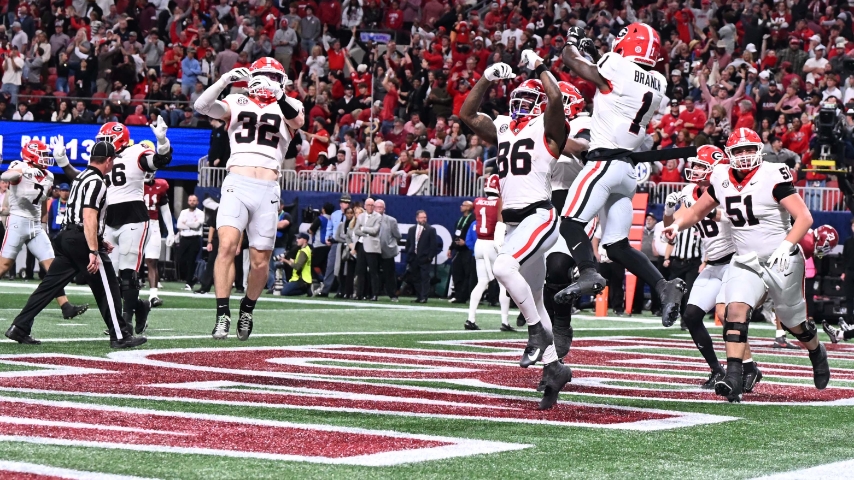
Q. You had said last week, and I don't know if you were joking or not, that Andrew [Smart] had kind of discovered Zachariah Branch. Was that accurate?
COACH SMART: He made me aware of him. He definitely didn't discover him, but he made me aware, when he went in the portal, of the value he had and who he was. So he would bring the video to me and like: Look at this guy, Dad. Look at this guy's punt return. Are we going to get this guy? I knew who he was, because he was a five-star coming out of high school, but we didn't actively recruit him. We weren't in his top three. Just knew who he was. Andrew made sure I knew that he was really good, but that's not why we got him. We had connections on our staff, once he went in the portal, between Donte [Williams] and D. (David) Hill that all had a relationship with their family.
Q. What impressed you the most about him?
COACH SMART: Probably the things that impressed me the most is his love for the game and his love for football. I wouldn't say that I didn't think he had it, but some guys that are so highly touted, they don't really buy into the culture and the work ethic that we have. He's never flinched. He's like, Coach, I want to be part of that.
I forget when they first got there, maybe mid-January, I don't even remember. But he wouldn't leave the building. He was there every day. He's like, I don't want to go to my apartment. I don't want to go home. I want to be up here. Is there anything I can watch? What can I learn? Can we work out again? Can we throw?
The guy has just been a football junkie. It probably should be that way. His dad (Sheva Branch) trains people and trains athletes. He worked out his whole life. He's a gym rat. He and his brother (Zion) have created a culture on our team of like, they love football. I won't say it's a shock to me, but you just never know. You have a perception of what you might get, and I told him, I said I had no idea that you would love football, work as hard as you do, practice as hard as you do. And I appreciate that about him.
Q. Coach, do you have a favorite play from this season executed by your team?
COACH SMART: Yeah, there's a lot of them. There's a lot of selfless plays. One that sticks out the most would be the run we had in the second half -- maybe the opening drive or the second or third drive, second half against Alabama, where London [Seymour] came around and had a key block and sprung Nate [Frazier].
The play Gunner [Stockton] had in Tennessee was executed -- a guy that we don't normally throw it to on that route. He's not usually number one in the progression, on the fourth-down play Gunner had. Both those plays were highly executed offensive plays that you work hard at, but you never know they're going to be that big of plays in the game moment.
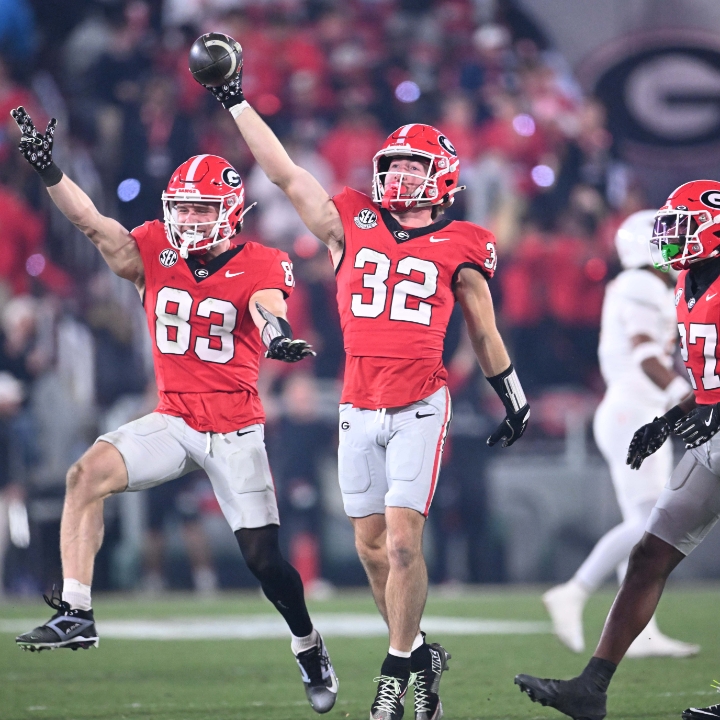
Q. You've had a willingness to use gadget plays in big games. Like the on-side kick against Texas this year, the fake punt last year. Where does this willingness to take a risk like that come from?
COACH SMART: Well, film study. It's part of coaching. Everybody is looking to gain an advantage and edge. There's not a coach in the country that's not trying to gain a competitive advantage. There are things you work on, try to highlight maybe your kids' strengths, maybe try to highlight their weaknesses. But they're only good if they work. It could be the greatest idea in the world, but if it doesn't work, it wasn't very smart. And that's just roll of the dice, I guess.
Q. You've obviously been here before. What do you think is the key to performing well after an irregular layoff since the last time you played on the field? What are the qualities that make a team successful when you can just come out and perform at the level you want to, even though they haven't played in the game action just a few weeks extra than other teams?
COACH SMART: Well, being in shape is one. Being focused. Understanding this is a business trip and you're here for a purpose. And recognizing that you've had a long layoff and you address the advantages or things you will lean on that you feel like are an advantage for you.
We try to list those things out: Okay, here's things we're strong at and we're going to lean on these things.
These are our core identity, regardless of when the last time we played was. How do we lean on those things?
But make no mistake about it, you want to play well in these types of games, you need good players. And good players play well.
Q. You mentioned about it being a business trip. I think Oscar Delp was saying you talked about having a plan to avoid distractions. Do you feel like your team is pretty locked in this time around?
COACH SMART: I didn't feel like they weren't locked in anytime around. I haven't been a part of a team that I didn't think was locked in. I don't measure locked-in-ness in terms of wins and losses. It's just the approach to the game that we have here and the culture we have here. That's important to me that our guys approach that the right way, and they have thus far.
Q. How difficult has it been to balance the playoff and winning a national championship? And then looking ahead to '26 with the transfer portal opening on Friday. If you were in charge, what would be the perfect calendar? Would it be to push back the signing period to February? Or the transfer portal back to the spring? How would it work?
COACH SMART: Man, I can't solve that. I wish I could; I wish I could solve it. Everybody will tell you there's an answer. I can tell you that the answer isn't currently where we stand. I can promise you that. I told myself before I came up here, I'm not getting up on a soap box. I can't express all the things that are going on. When you've got kids officially visiting places they're currently at. They're going to go in the portal and then official visit the place they're currently at? It's crazy what's out there.
We created a system that only allows you to gain advantage if you want to leave. And that's not the players' fault. It's not the agents' fault. It's not our fault. It's not anybody's fault. It's just, you've created a system that inherently rewards what defies a team concept. And in a team sport, it just makes no sense.
You tear at the culture of every organization by promoting something that doesn't exist.
It's almost like it just permeates what society is now, where it's me, me, me, me, and nothing about the teams. It's very unfortunate. But it's not the kids' fault. It's not the agents' fault. Ryan Day said it before: Nobody wants to be playing in the playoffs and dealing with the portal windows.
We knew when we made the new portal windows that was going to happen. And that's going to happen on January 2nd for teams -- I guess four teams are still involved. But I still think that's better than where we were at this time last year, where we had visits and portals going on all December. But we're still not there yet. And I don't have the answer in terms of the best way to do it.
Q. Where potential transfer quarterbacks are getting $3 million or $4 million. Is it sustainable?
COACH SMART: I think you would have to ask the ADs that. Because ultimately, they're the ones that are going to be footing the bill and paying the bill. Again, it's supposed to be NIL, and it's supposed to be revenue share, and sustainability is a big word. I don't think it's just about quarterbacks. Certainly, I do believe quarterbacks deserve their share of that, and they do a great job and they have the most pressure on them. They're the highest paid guys usually in the NFL.
But when you go back and look at it and say, if we're actually operating off of what people say is a rev share, it's hard to do the math and pay the guys on your team. Everybody is taking a different philosophy in how they manage that money. It doesn't seem like everybody is operating under the same premise of numbers.
Q. In the spring, you talked about fire, passion, and energy, and running the football. And we've watched that identity come to fruition. How much does this team look like the model that you started with in the spring? How are you able to diagnose exactly what this team would need to do to get to this point?
COACH SMART: Well, I don't know that we knew then this is what the team needed to get here. We just knew what the team needed. The best version of this team was only going to get there with fire, passion, and energy. Ability to run the ball and ability to stop the run. Those are things we didn't do well last year. So it wasn't about we scripted out what we needed to make the playoffs. We scripted out what we needed to be the best team.
My goal every year -- I learned this a long time ago, Coach [Bobby] Bowden and Coach Saban and even my dad (Sonny Smart), is like did you get the most out of that team? Did that team get the most out of their potential? I think there's a little bit of flawed system out there. There's some coaches that get the most out of their team and they don't win a national championship. That's a hell of a year.
We used to be able to credit a lot of people with a hell of a year. It's unfortunately gotten to where it's win it all or nothing. And we don't evaluate our success that way. I don't. I look at it intrinsically, as did this team get the best out? And this team needed fire, passion, and energy. It needed the ability to run the ball and it needed the ability to stop the run. We haven't done that perfectly either, but we've done it at a little bit higher level than what we did in years past.
Q. When you guys left here last year, I think probably the center of the criticism from Georgia fans was Mike Bobo. That's probably not new for him over the course of his career. I'm curious what you think fans get wrong about him? Why do you think he's the right guy for Georgia and for that job right now?
COACH SMART: I don't think he's the right guy, I know he's the right guy. Like I've said multiple times, I don't really pay much attention to what our fans say, seek, what they feel like. I don't respond to them. I don't work for them. Honestly, my job is to put the best product, the best football team I can out there. I need motivators, leaders of men. I need people who have offensive experience, knowledge.
I put him up against anybody in the country because of his knowledge, his experience, what he's done, the staff he has. Mike doesn't do it alone. He's got an incredible staff who bring information to him, cutting-edge ideas. I love what they do offensively and how they utilize our players' skill sets.
You have to conform the offense to who you have, and I think they've done an incredible of that with the backs, receivers, tight ends, quarterbacks, the specialty pieces we have. He has utilized those guys' skill set. And I don't think anybody in the country has done a better job doing that than he has.
Q. [Mike] Bobo recently indicated something on the order of you're not afraid to get on to him. With these coaches who have been your long-time friends, do you expect more from them? What is that dynamic like? Is it difficult suddenly being, let's say, the boss of someone that was your long-time friend?
COACH SMART: No. I mean, we hold everybody accountable in the organization. That's my job. That's what I get paid to do is hold everybody accountable within the organization. And I think good leaders do that. They can separate work from friendship. I take input from those guys. I listen to those guys. They're very knowledgeable.
There's a reason why you pay the people on your staff to be on your staff. The better staff you assemble, the better coach you are. I'm a reflection of the staff we have. I don't look at it as getting on people. I think that's a media thing. I look at it as demanding excellence and demanding accountability to be at a high standard.
I learned a long time ago that you hold everybody to that standard, there are no free passes. So that's my job. Their job is to lead, command their groups, get the most out of their players, and they do a tremendous job of that.
Q. A moment ago, you were talking about the "me, me, me" and the challenges that we have in college football with the transfer portal and NIL. I want to ask you specifically about dealing with contracts. You talked about this long ago. I think Coach Saban talked about it long ago. What's the answer for there to be a give-and-take and some accountability when maybe a player leaves that you thought you were going to have? Because the way the calendar goes, if you lose a player late in the portal, you may not have time to replace them.
COACH SMART: I would really prefer there to be uniformity in the contracts so that it went more smoothly and easier in terms of everybody had the same contract. Whatever that contract is, whatever can be agreed upon. I'm not saying it has to be completely the team's way or the kid's way or the agent's way. It would be better if there were uniformity, because you would not get into special situations where somebody is saying: Well, I'll do this. Well, then I'll do this.
Everybody's going through it right now. There's red-lining of contracts. I respect that, I understand that. But you're not dealing with that in some of the major sports because that's already been negotiated. There's a CBA. There's anti-trust laws in some of those.
With ours, it makes it much more difficult, because every team can have an independent contract. If a kid doesn't go to class at all, should he get paid? I feel strongly that you're here to get your education. You should go to class. You should be held accountable. Most parents want that accountability.
Then you've got guys who want to strike things out of there. Does a kid have a right to say: I want to redshirt, and he's being paid by somebody and I'm going to say I want to redshirt and not play. Or a kid that's already redshirted, he can't redshirt, electing not to play but still get paid. There's things all throughout a contract that can be talked about, debated, and generated, and makes it really tough.
But the timing issue is the toughest one, because the teams in the playoff are going to have a little less time to operate in the portal than other people, so it makes it tough if a kid says: Yeah, I want to be there and I want to be a part of your program, and re-signs and then has a change of heart a week later? You missed out on every opportunity to replace that player. It makes it very difficult.
It's a very tough scenario and I think everybody in college football is trying to navigate it right now. Players, parents, representation, and colleges, and it's just a really tough time.