BREAKING: UGA Football Availability Report for Ole Miss Rebels Matchup Released
Real Georgia Fans Don’t Miss the Dawg Post Newsletter - Sign up now!
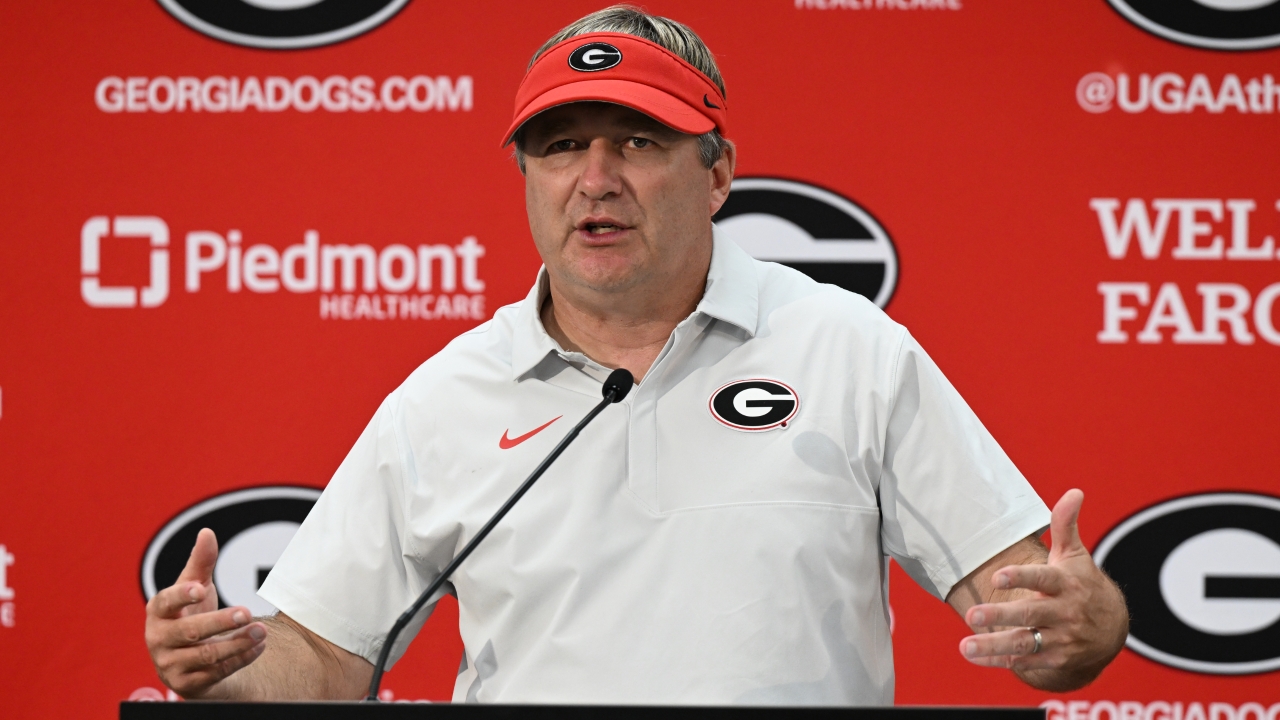
ATHENS - UGA Football released its College Football Playoff-mandated availability reporting Kirby Smart’s No. 3 Georgia Bulldogs. Here is what you need to know abut who can play, who might and who can’t heading into this Thursday’s action.
UGA Football Availability Report
UGA Football Player – Status
UGA WR Colbie Young - Probable
UGA TE Ethan Barbour - Probable
UGA LB Gabe Harris - Out
UGA DB Kyron Jones - Out
UGA DL Jordan Hall - Out
UGA OL Drew Bobo - Out
UGA DB Joenel Aguero - Out
Ole Miss Rebels Availability Report
Ole Miss Player – Status
Ole Miss DB Cedrick Beavers - Out
Ole Miss OL John Wayne Oliver - Out
Ole Miss LB Raymond Collins - Doubtful
Ole Miss TE Caleb Odom - Questionable
Ole Miss RB Kewan Lacy - Probable
Ole Miss TE Dae'Quan Wright - Probable
LIMITED TIME: Get Dawg Post coverage for $1 RIGHT NOW
WHAT DO THESE TERMS MEAN?
Available = The player is fully available for the next game.
Probable = Likely to play, barring any setbacks.
Questionable = Uncertain to play due to injury or condition.
Doubtful = Unlikely to play due to significant concerns.
Out = Player will not participate in the upcoming game.
Game-Time Decision = Final decision will be made closer to the game.
Key Parameters
Player Status Designations
If a participating institution has knowledge that a student-athlete may be unable to participate in the upcoming game for any reason (including, but not limited to, injury, illness, suspension, ineligibility, or personal matter), the institution must accurately designate the student-athlete’s participation status on the Initial and Updated Reports as follows:
• Out (i.e., will not play/0% chance to play);
• Doubtful (i.e., unlikely to play/25% chance to play);
• Questionable (i.e., uncertain to play/50% chance to play);
• Probable (i.e., probable to play/75% chance to play); or
• Available (i.e., will play/100% chance to play).
Game Day
On the Game Day Report, the only permissible designation statuses are:
• Available (i.e., will dress for the game and be available to play);
• Game Time Decision (i.e., coaches and/or medical personnel need to evaluate the student-athlete in pre-game warmups before deciding whether he can participate in the game); or
• Out (i.e., not dressing or available for the game).
Further information
A participating institution must affirmatively designate a student-athlete as Available (i.e., will play/100% chance to play) when a student-athlete previously appeared on any Availability Report for the upcoming game and, due to a change in circumstances, is expected to participate in the upcoming game.
The status of “Out” is a broad catch-all that covers any reason why a student-athlete is not available to participate in the upcoming game including, but not limited to, (1) an injury or illness, (2) a suspension imposed by the head coach, institution, conference, NCAA, or CFP, (3) an eligibility or legal matter, or (4) a personal or family matter. Except for exempt student-athletes, any student-athlete who does not appear on an institution’s Availability Report shall be regarded as Available for the upcoming game.
The Availability Report shall not contain any information other than the student-athlete’s name and designated participation status. An institution may exercise its own discretion to provide additional information regarding a student-athlete’s status, if appropriate, via a press release, social media post, or coach’s comments, provided this information is consistent with information shared via the Availability Report.
An institution with a football student-athlete suspended for the first half of the upcoming game due to the NCAA targeting rule must ensure the student-athlete is listed on the Availability Report as “Out (1st Half).”
Duty to act in good faith
Institutional personnel have a duty to act in good faith to comply with this policy. Acts of gamesmanship intended to hide a student-athlete’s true participation status for competitive or strategic reasons are prohibited. Any other conduct that reasonably could be construed as misleading or creating unnecessary confusion regarding a student- athlete’s participation status is likewise prohibited. An institution must take extra precautions to act in good faith to accurately disclose the status of a high-profile student-athlete (e.g., starting quarterback).
Examples of conduct that would violate the duty to act in good faith include, but are not limited to, (a) an institution listed a high-profile student-athlete as Doubtful on the Initial and Updated Reports and as a Game Time Decision on the Game Day Report for several consecutive games notwithstanding that the student-athlete continued to play their normal role in each game and there was no credible explanation for why the student-athlete was repeatedly listed as Doubtful and a Game Time Decision, (b) an institution listed an unusually large number of student-athletes as a Game Time Decision on the Game Day Report, yet all such student-athletes played their normal role in the game, and there was no credible explanation for why an unusually large number of student-athletes were listed as a Game Time Decision (instead of Available) on the Game Day Report, and (c) a high-profile student-athlete was listed as Available on every Availability Report leading up to the game and, despite dressing for the game, did not play in the game, and the CFP’s post-game review revealed that the student-athlete’s participation in practices leading up to the game had been severely limited and the coaching staff knew the student-athlete could not participate in the game.
Duty to Avoid a Surprise
Participating institutions must avoid a surprise (i.e., a sudden and drastic change in a student-athlete’s participation status) absent extenuating circumstances (e.g., an unexpected illness or injury). An institution must take extra precautions to avoid a surprise with a high-profile student-athlete’s status.
Participating institutions must make every reasonable effort to progress a student-athlete through the designated participation statuses in a gradual manner leading up to the game such that, for example, a student-athlete is not updated from Out directly to Available. If a student-athlete has any chance to play in the upcoming game, he shall not be listed as Out and, at a minimum, must be listed as Doubtful on the Initial and Updated Reports.
Example of situations that, absent extenuating circumstances, would violate the duty to avoid a surprise include, but are not limited to, (a) a student-athlete was listed as Out on the Initial and Updated Reports and moved directly from Out to Available on the Game Day Report, and (b) a student-athlete was listed as Available on the Initial and Updated Reports and moved directly from Available to Out on the Game Day Report, and there was no credible explanation for the student-athlete’s sudden and drastic change in status.
Duty to Avoid Inconsistent Public Comments
Institutional personnel (e.g., a head or assistant coach) shall not make public comments (including on social media) regarding a student-athlete’s availability that are inconsistent with the student-athlete’s status on the Availability Report.
Enforcement Process
The CFP office possesses the authority to investigate potential violations of this policy including, but not limited to, the ability to (a) speak with relevant institutional personnel and student-athletes and (b) review relevant practice film and other relevant materials (e.g., practice plans). Institutional personnel must cooperate with this process.
As part of the CFP’s review process, an institution has until 1 p.m. (Central)/2 p.m. (Eastern) the day after the game to provide the CFP with information to support its contention that it was placed at a competitive disadvantage due to its opponent’s alleged violation of this policy.